
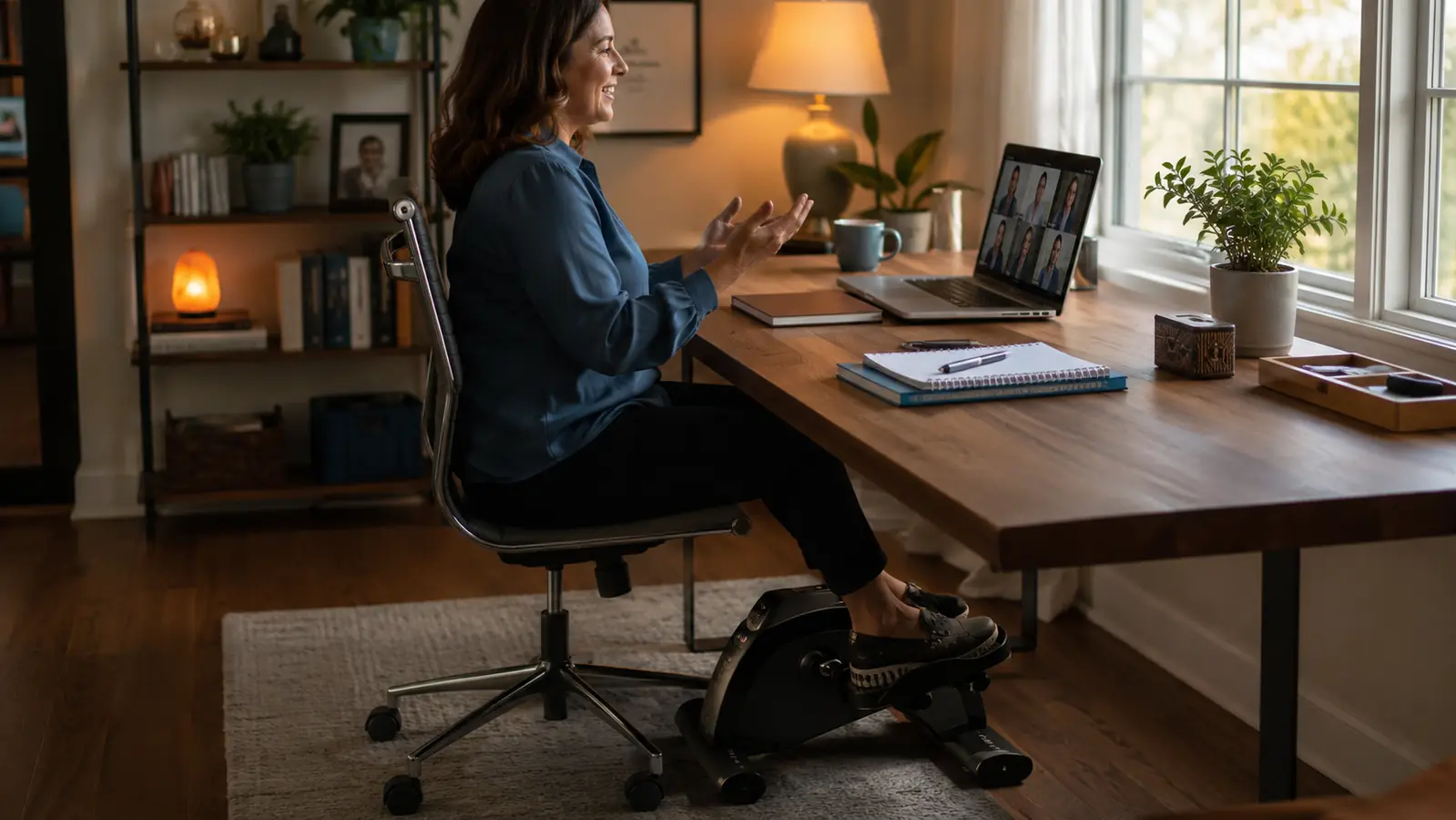
I run a six-person remote support team from a spare bedroom in Ohio, and by month four of working from home, my legs had started going numb around 2 p.m. most days. Not painfully numb, just that dead, prickly feeling you get after too many hours in the same position. I'd tried a standing mat and I'd tried setting hourly timers to stand up and stretch, and none of it stuck, because the truth is I forget to move when I'm deep in a support queue. In February I bought the himaly Mini Exercise Bike, the small under-desk pedal exerciser with the LCD screen, mostly because it was cheap enough that losing the bet wouldn't sting.
Five months later it's still parked under my desk, and I've pedaled through more support tickets, budget reviews, and one three-hour all-hands meeting than I can count. This is what actually happened over those five months, not what the box promised, including the parts that didn't hold up as well as I hoped.
The Quick Verdict
A genuinely useful way to keep your legs moving during desk work, but the LCD numbers run optimistic and it's not built for hard, daily high-resistance pedaling if you're on the heavier side.
Amazon Check Today's Price →Still Sitting Perfectly Still for 8 Hours a Day?
Your legs weren't built to stay locked in one position from your first call to your last email. The himaly pedal exerciser slides under almost any desk and gives you a low-effort way to keep blood moving without leaving your seat or interrupting a video call.
Amazon Check Today's Price on Amazon →How I've Used It
My desk is a standard 29-inch-tall IKEA setup with about 27 inches of clearance underneath, and the himaly unit fits with a couple inches to spare on either side of my feet, even with my desk chair pulled in close. I keep it centered under the desk and pedal in short blocks rather than one long session. Typically that means 10 to 15 minutes first thing in the morning while I read overnight tickets, another 10 to 15 during my early afternoon status call, and a final stretch late in the day when my focus starts to fade.
I'm 5'11" and about 190 pounds, and I mostly use it in the seated, under-desk position rather than propped up as a tabletop arm exerciser, which is the other advertised use. The pedals are wide enough for my shoe size 11 sneakers without my heel hanging off the edge, and the non-slip pedal straps have held up fine through daily use. I don't wear socks-only when I pedal, since bare feet slide a bit more on the plastic pedal surface.
The resistance dial has eight settings, and I live somewhere around level 3 or 4 for most of my sessions. That's enough to feel like I'm doing something without breaking a sweat before a video call, which matters when you're on camera five times a day. I've pushed it to level 7 a handful of times on lighter meeting days, and that's a real workout, not a fidget.
I also tried moving it to the tabletop for a few weeks to use as an arm exerciser during a stretch of shoulder tightness from too much mouse work, and it did the job there too, though the pedal size feels a little large for hand grips compared to a dedicated arm cycle. I went back to under-desk use once my shoulder settled down, since that's where it earns its keep every single day.
The Resistance Dial and the LCD Screen, Honestly
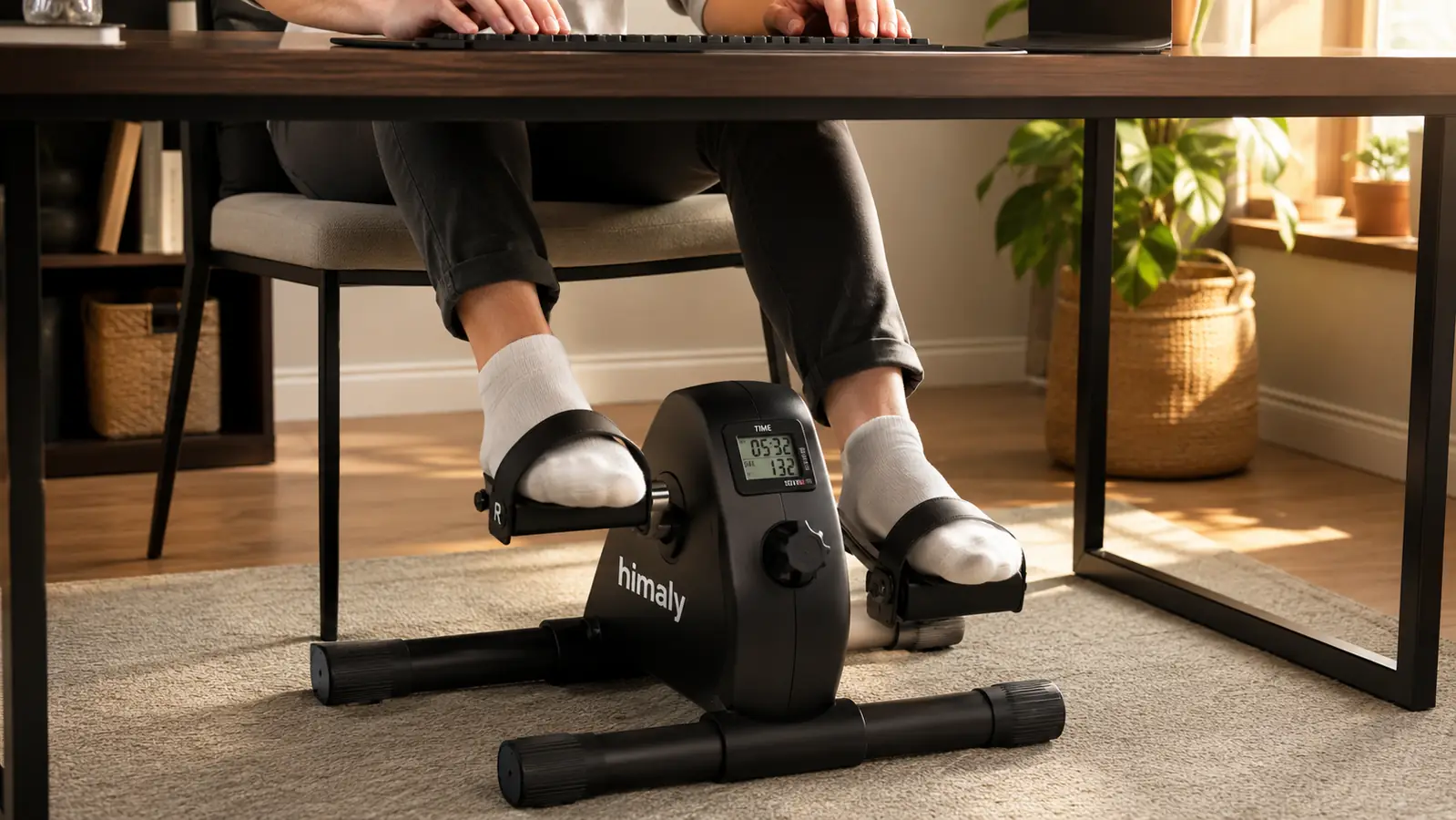
The LCD screen tracks time, distance, rotation count, and an estimated calorie burn, and I'll say upfront that the calorie number is not something I'd trust. Comparing it against a separate fitness tracker I wear on my wrist, the himaly display consistently reads 30 to 40 percent higher on calories for the same session. Time and rotation count seem accurate enough, since I've clocked sessions with my phone timer and the numbers match within a few seconds.
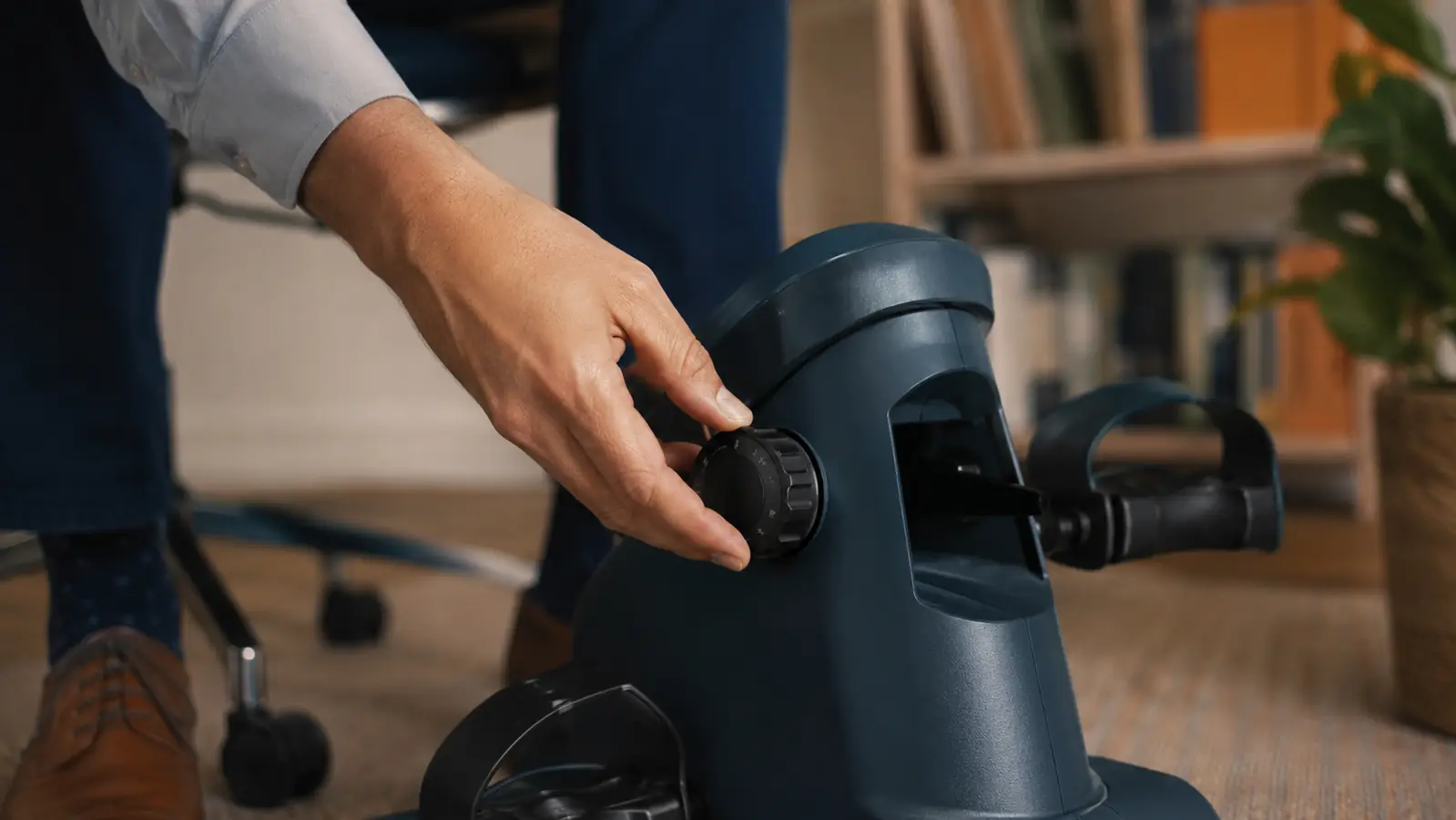
The resistance dial itself is the part I actually rely on day to day, and it's held its feel over five months. It's a simple twist knob, not a digital setting, so there's no app pairing and nothing to charge. I appreciate that. The screen runs on two AAA batteries, and I'm on my second set after roughly five months of near-daily use, which lines up with what I'd expect from a small LCD display.
One thing worth knowing before you buy: the screen resets to zero every time you stop pedaling for more than a few seconds, so there's no running weekly or monthly total. If you want to track long-term progress, you'll need to log your own numbers somewhere, which I do in a plain notes app after each session.
What Changed After Five Months
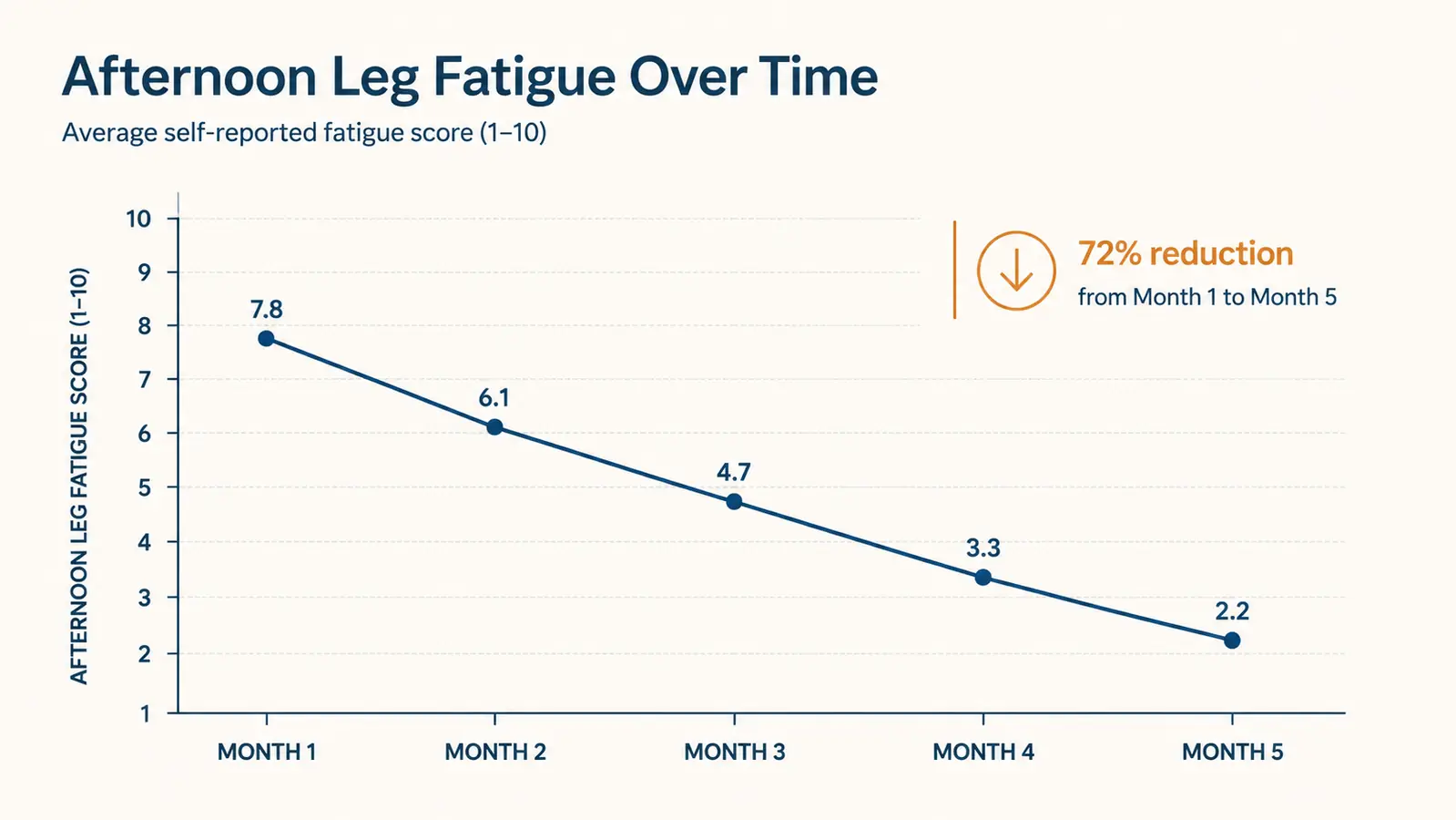
The 2 p.m. leg numbness I started with is mostly gone. I still notice some stiffness on days when I skip pedaling entirely, usually because I'm slammed with back-to-back calls, but on days I use it even for two short sessions, my legs feel like they belong to me by the end of the workday instead of feeling like dead weight under the desk.
I also noticed a smaller, less expected change around month three: I stopped snacking as much during my early afternoon slump. I can't prove the pedaling caused that directly, but the timing lines up, and a few other remote workers I've talked to mentioned the same pattern, that a bit of leg movement seems to cut the urge to reach for chips out of boredom rather than hunger.
My resting heart rate hasn't moved in any measurable way, and I want to be honest about that. This is not a cardio machine. It's a low-intensity movement tool for people who sit for a living, and treating it like anything more than that will leave you disappointed.
By month five, the habit itself is what's changed most. I no longer have to remind myself to use it. It sits under the desk in plain sight, and reaching my feet down to start pedaling has become as automatic as opening my laptop in the morning, which is really the whole point of a tool like this. If it required real effort to remember, it would have ended up in the closet by week three like everything else I've tried.
The Wobble, the Noise, and the Desk Clearance Reality
There is a wobble, and it shows up most on level 6 through 8 resistance with a faster cadence. The unit weighs about 12 pounds and has four small rubber-footed legs, and on my hardwood floor it can creep forward a couple inches over a long session if I'm pedaling hard. On the small area rug under my desk, it stays put better. If you've got carpet or a rug down there already, that solves most of the movement issue.
Noise-wise, it's quiet enough for calls at low to mid resistance, a soft mechanical whir that hasn't drawn a single comment from a coworker in five months of video meetings. At higher resistance and faster pedaling, there's a bit more of a rhythmic clicking sound, noticeable enough that I dial it back to level 4 or below whenever I'm actively talking on a call rather than just listening.
Desk clearance is the real gatekeeper here. If your desk sits lower than about 27 inches, or you've got a support bar running across the front of the desk frame, measure before you buy. I checked three friends' home office setups after buying mine, and one of them had a support bar low enough that the unit wouldn't fit without pedaling at an awkward angle.
Assembly and Build Quality After Five Months
Assembly took me under ten minutes with the included hex key, mostly attaching the two pedal arms and the base legs. There's no tool beyond what's in the box, and the instructions are basic but workable if you've ever put together flat-pack furniture. I didn't need to look up a video, though I did double check that both pedal arms were torqued down evenly, since an uneven pedal arm was the most common early complaint I saw before ordering.
Five months of near-daily pedaling later, the plastic housing around the flywheel shows light surface scuffing where my heels occasionally brush it, but there's no cracking and no loose screws that I've had to retighten. The pedal straps have some visible wear at the stitching but haven't torn. I'd call the build quality appropriate for the price point, not premium, but not flimsy either.
The one part I keep an eye on is the resistance knob's internal friction pad. Around month three I noticed level 4 felt slightly lighter than it had when new, which is common with friction-based resistance systems as the pad breaks in. It's still usable and consistent session to session, just marginally softer than day one, and I don't expect it to fail outright based on how it's holding up now.
What I Tried Before This
Before the pedal exerciser, I tried a walking pad, which worked but took up floor space I didn't have in a spare bedroom office, and it was loud enough that I had to mute myself constantly. I also tried a mini stepper, which felt more like a workout and less like something I could do while typing or talking, since it required more upper body balance and attention.
The pedal exerciser won out because it's the only option that lets me keep both hands fully free on the keyboard and mouse while my legs stay in motion. That's the entire value proposition here: it doesn't ask for your attention, just a bit of your leg muscle.
What I Liked
- Fits under most standard desks with 27+ inches of clearance
- Quiet enough for calls at low to mid resistance
- Resistance dial holds its feel after 5 months of near-daily use
- No app, no charging, no software to fuss with
- Low enough effort to use while typing or on a call
- Assembles in under 10 minutes with the included hex key
Where It Falls Short
- Calorie tracking on the LCD runs noticeably high compared to a fitness tracker
- Some wobble on hardwood floors at higher resistance and cadence
- Screen resets every session, so there's no built-in long-term tracking
- Higher resistance settings get audibly clicky
- Not a real cardio workout, more of a circulation and fidget tool
- Resistance knob softens slightly with heavy long-term use
It doesn't ask for your attention, just a bit of your leg muscle, and after five months that's exactly why it's still under my desk instead of in a closet.
Who This Is For
This is built for people who sit at a desk most of the day and want a low-friction way to keep their legs from going stiff, without adding a scheduled workout to an already packed day. If you're on video calls for a living, work from a standard-height desk with decent under-desk clearance, and you want something you can pedal at low effort during a meeting without anyone noticing, this fits that exactly. It's also a solid fit for anyone easing back into movement after a desk-bound stretch of recovery, since the lowest resistance setting is genuinely gentle.
Who Should Skip It
If you're taller than about 6'2" or have a desk with less than 27 inches of clearance, measure carefully before ordering, since fit issues are the most common complaint I've seen echoed elsewhere. If you're looking for an actual cardio workout rather than circulation and fidget relief, a mini stepper or a short walk between calls will serve you better. And if hardwood floors without any rug are your only option, expect to reposition it every so often during harder sessions, especially if you tend to pedal fast at higher resistance.
Your Legs Deserve Better Than 8 Hours of Nothing
Five months in, this is still the one desk gadget that survived past week two in my home office. If your afternoons feel like the numbness I used to get, it's worth checking today's price and seeing if it fits under your own desk.
Amazon Check Today's Price on Amazon →