
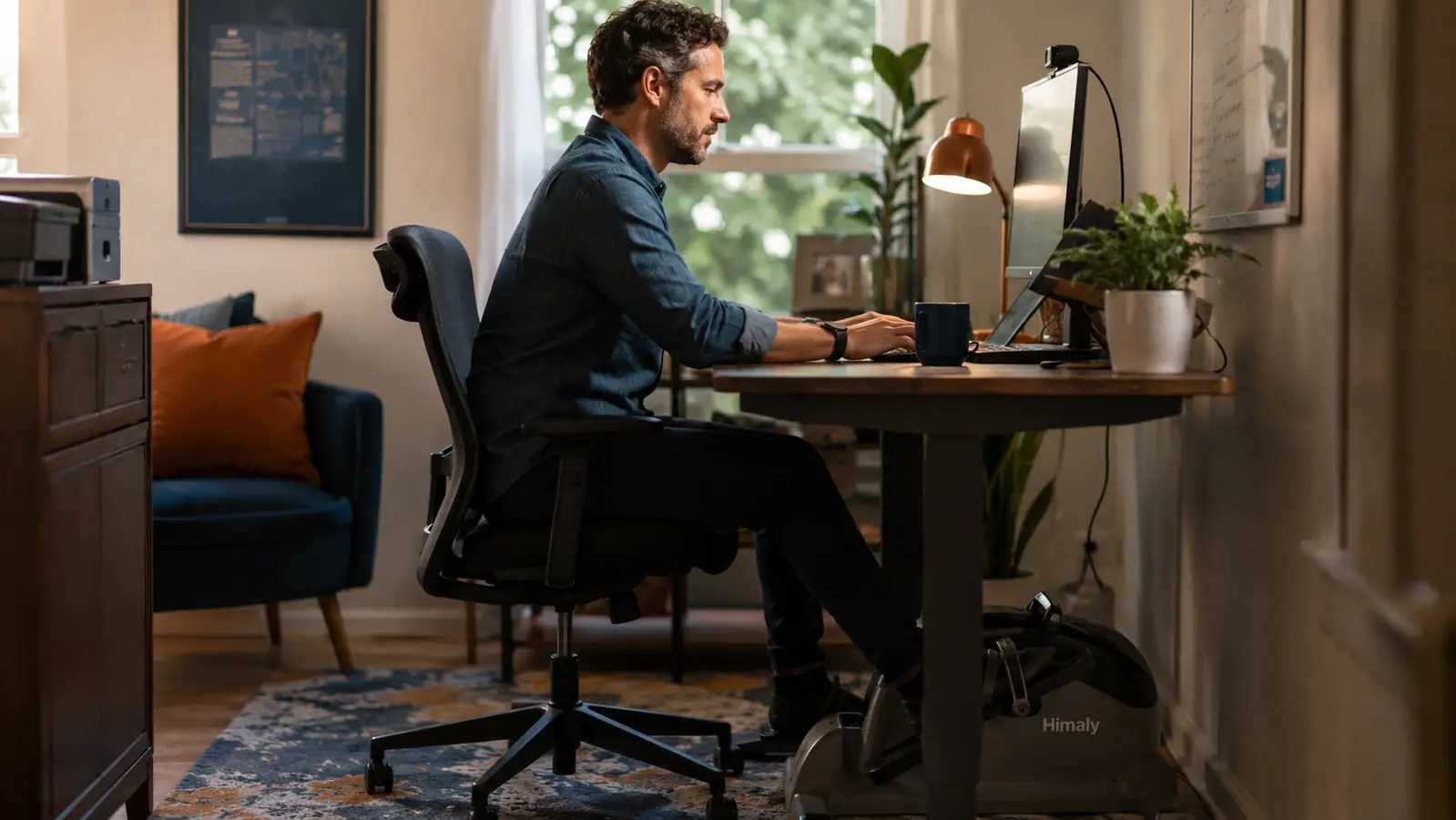
If you have narrowed your desk-fitness search down to two categories, you have probably landed on the same two I did: pedal exercisers like the himaly Under Desk Bike, and mini steppers with resistance bands. I have used both in my own home office over the past year, one tucked under my desk while I answer emails, the other pulled out during the ten-minute gaps between calls. Here is the short answer before we get into the details. If you sit at a desk most of the day and want something that runs quietly while you actually work, the himaly Pedal Exerciser wins. If you want a standalone burst of cardio in short breaks and do not mind stepping away from your keyboard, a mini stepper like the Sunny Health & Fitness Twist Stepper earns its spot too.
I did not compare these two on spec sheets alone. I ran both through the same five tests over three weeks: noise level during a video call, footprint under a standard 48-inch desk, how long resistance adjustments actually took, how each one felt after 90 minutes of continuous low-intensity use, and whether either one interrupted my typing accuracy. The results below come from that, not from marketing copy.
It is worth being upfront about what these two products are actually for, because a lot of buyer's remorse in this category comes from expecting one machine to do the job of the other. A pedal exerciser is a low-intensity, background-movement tool built around the fact that you are still working while it runs. A mini stepper is a foreground exercise tool, closer in spirit to a small piece of gym equipment than a desk accessory. Neither one is trying to replace a real workout, and neither one should be judged as if it is failing at a job it was never built to do.
Setup is worth mentioning too, since it affects how quickly either one actually gets used instead of sitting in a box. The himaly unit needed about five minutes to unfold and set the resistance dial before its first use, no tools required. Most mini steppers need the resistance bands hooked onto the base posts, which took me closer to fifteen minutes the first time and involves more finicky small parts that are easy to misplace. Neither is a dealbreaker, but if you are the type who buys fitness equipment and never quite gets around to assembling it, the shorter setup time on the pedal exerciser removes one more excuse.
| Under-Desk Pedal Exerciser | Mini Stepper | |
|---|---|---|
| Price | Affordable one-time purchase | Varies by retailer and resistance band count |
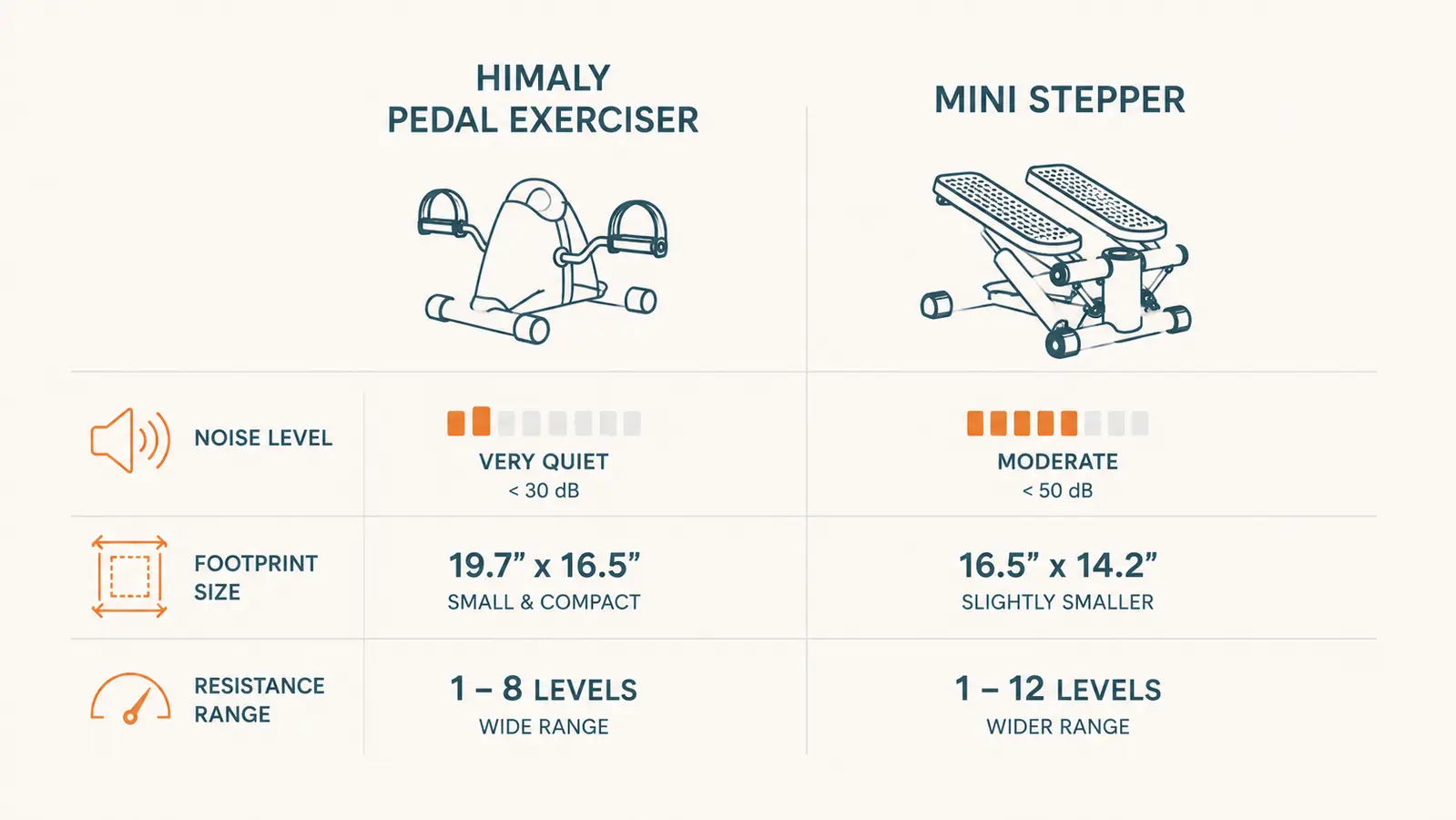
| Footprint | 17 x 14 inches, sits flat under most desks with 28 inches or more of clearance | 15 x 20 inches, needs open floor space, does not fit under a desk |
| Noise While Working | Near silent at low resistance, a soft whir at higher settings | Audible clacking on hinge-based models, worse on hard flooring |
| Usable While Typing or on Calls | Yes, designed for seated pedaling under a desk during work | No, requires standing and full attention, not desk-compatible |
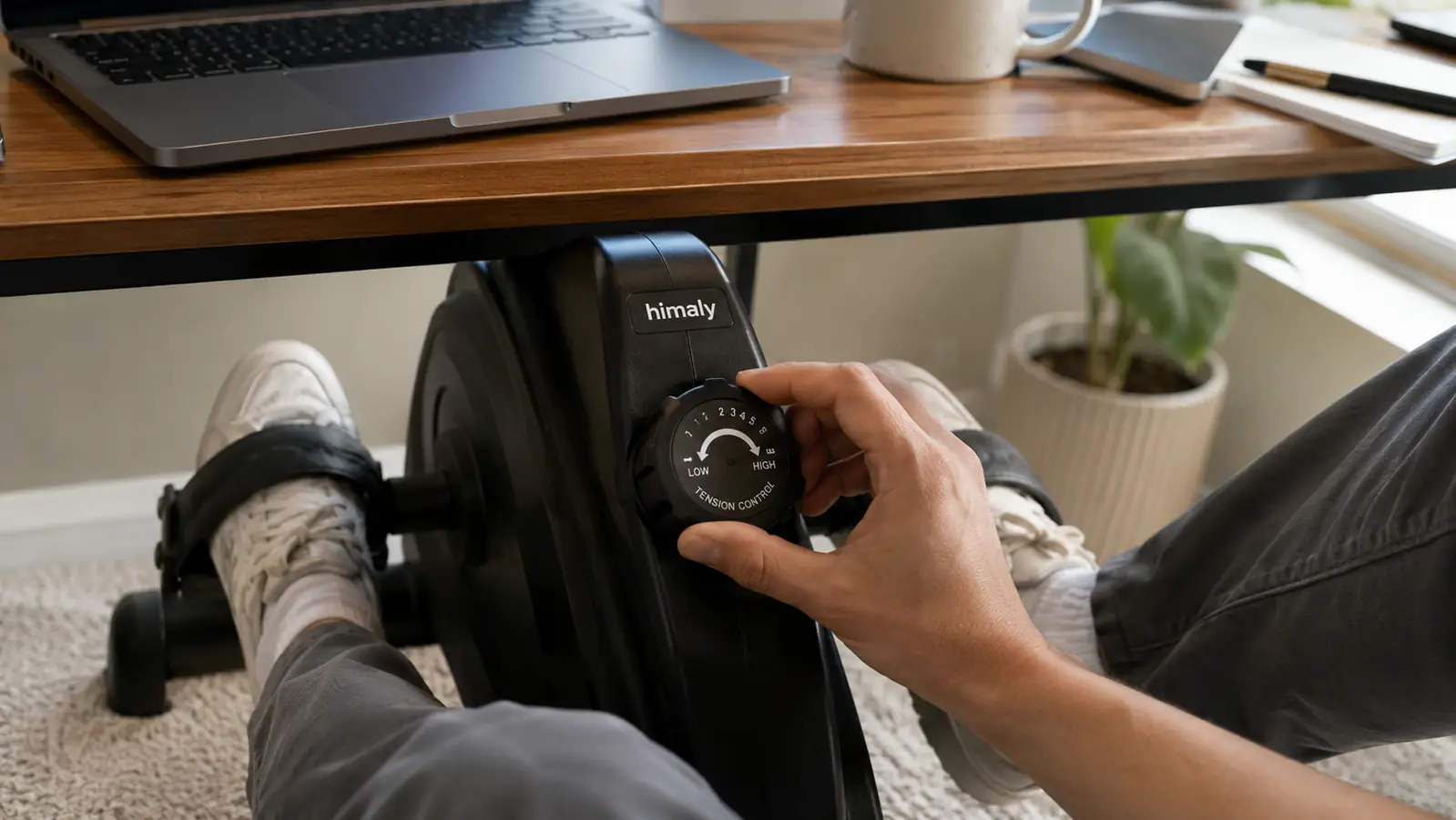
| Resistance Adjustment | Dial adjustment, 8 levels, changes in about 2 seconds without stopping | Fixed by resistance band tension, usually 2 to 3 levels, requires stopping to swap |
| Weight Capacity | 250 lbs | 220 lbs on most consumer models |
| Tracking Display | LCD shows time, speed, distance, calories, rotation count | Basic step counter on most models, no distance or calorie tracking |
| Best For | Long stretches of seated desk work, low-impact daily movement | Short standalone cardio bursts, break-time step goals |
| Warranty | 1-year manufacturer warranty | Varies by brand, often 90 days |
Where the himaly Pedal Exerciser Wins
The whole point of desk fitness gear is that it happens while you are still working, and that is where the pedal exerciser pulls ahead. I can pedal through a full client call without anyone on the other end noticing, and I have tested this on purpose, muting myself and asking my business partner if she heard anything. She had not. A mini stepper cannot make that claim. Even the quieter hydraulic models produce a rhythmic thud that carries through a laptop mic, and you cannot type accurately while standing on one anyway, so it forces you to actually stop working.
Footprint matters more than people expect until they try to fit a stepper under a 48-inch desk and realize it physically cannot go there. The himaly unit sits flat at about 17 by 14 inches and slides under my desk with room to spare, even with a footrest already in that space. The dial resistance is the other underrated feature. I can bump it up going into a focused writing block and back down during a call, all in about two seconds, without breaking stride or looking down. That is not something you can do mid-stride on a stepper with fixed resistance bands.
The LCD display is a small thing that ended up mattering more than I expected. It tracks time, rotation count, distance, and an estimated calorie count, and having a number in front of me turned a vague habit into something I could actually track week over week. I started logging my rotation count every Friday, and watching that number climb over two months did more for consistency than any willpower ever has. A mini stepper's basic step counter does not give you the same sense of progress, mostly because it is not designed to be glanced at while you are also reading an email.
There is also the question of what happens on a bad day, the kind where you barely have time to stand up let alone carve out ten dedicated minutes for exercise. On those days the pedal exerciser still gets used, because it costs nothing extra to turn my feet in circles while I read through a spreadsheet. A mini stepper on a bad day just sits in the corner unused, because it demands a level of intentional effort that a packed schedule does not always allow for.
Where a Mini Stepper Wins
I do not want to oversell the pedal exerciser here, because a mini stepper does some things better. It works your glutes and calves in a way pedaling from a seated position simply does not, since you are bearing your own body weight through each step. If your goal is closer to actual exercise rather than passive movement while working, that matters. I noticed more soreness in my legs after stepper sessions than after weeks of daily pedaling, which tells me the two are not really interchangeable in terms of intensity.
A stepper also forces a real break. That sounds like a downside, but for people who tend to work through lunch and forget to stand up for six hours straight, a stepper's requirement that you actually leave your chair is arguably the healthier habit. If your bigger problem is sitting too long rather than fidgeting too little, the stepper's insistence on a standing break might solve the actual issue instead of working around it.
There is also a portability argument for the stepper that surprised me. It has no cords, no dial to fuss with, and you can pick it up and move it to the living room while watching something in the evening. The himaly unit works fine that way too, but it is built with a desk in mind, so it feels a little out of place anywhere else. If you are the type who wants one piece of equipment that does double duty as living-room cardio and desk-time movement, the stepper flexes into both roles more naturally.
Resistance bands on a stepper also tend to build more noticeable strength over time than the smooth, low-resistance rotation of a pedal exerciser, simply because the loaded portion of each step is harder than a full rotation of pedaling. If strength in the legs is more of a priority for you than simply logging movement minutes during the workday, that is a real point in the stepper's favor, and I would not talk anyone out of it for that reason alone.
Still typing through your workday without moving? That's the problem the himaly Pedal Exerciser was built to solve.
It sits under your desk, works while you're on calls, and adjusts resistance without breaking your focus. Check today's price and see if it fits your setup.
Amazon Check Today's Price on Amazon →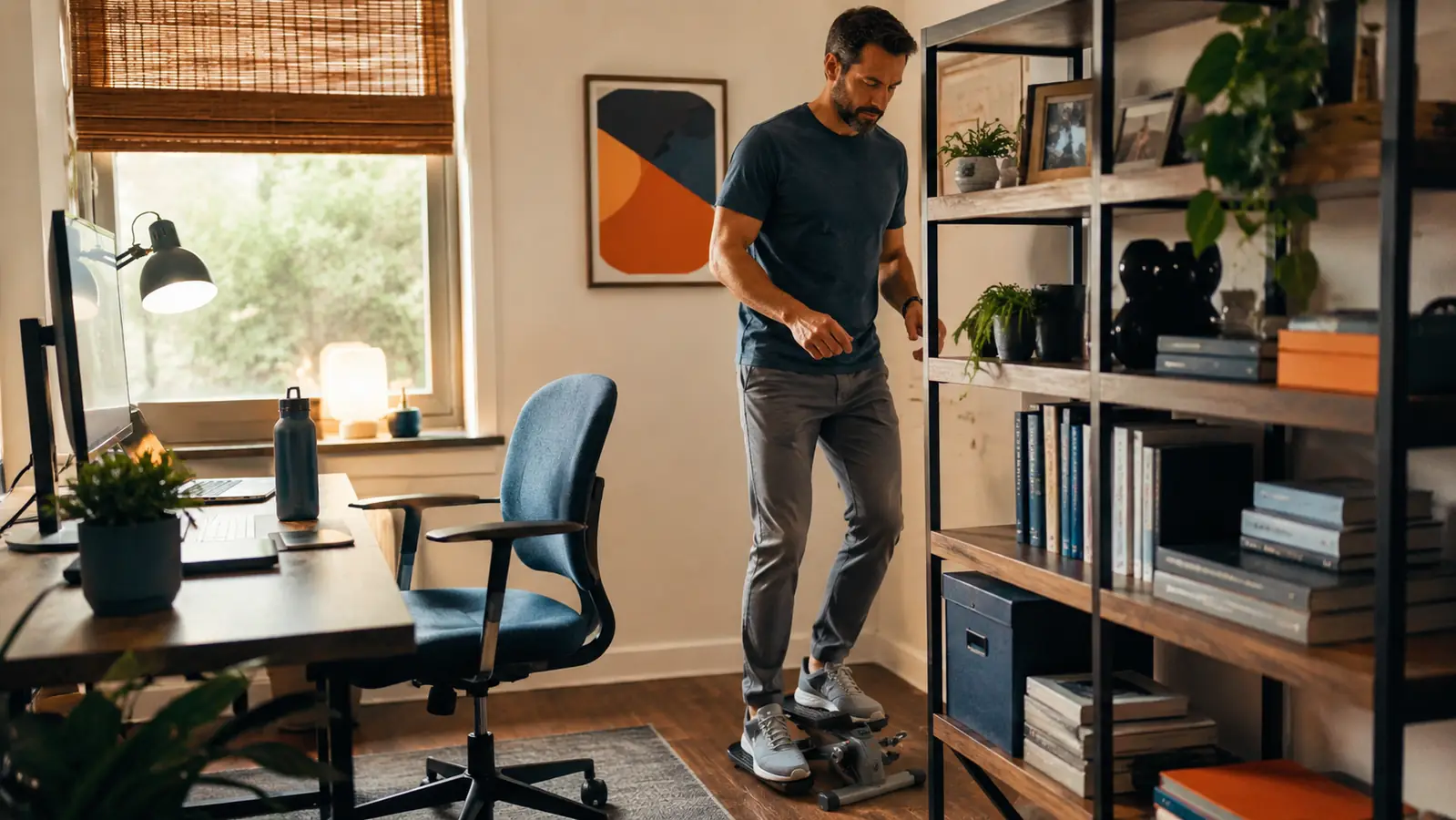
Who Should Buy Which
If your day is mostly back-to-back meetings and heads-down writing, buy the pedal exerciser. It is the only one of the two that lets you move without pausing your work, and that quiet, low-friction consistency is what actually adds up over months, not one intense burst of activity you skip half the time because it means stopping what you are doing. I have used mine almost daily since last spring specifically because it asks nothing of my schedule.
If your goal is a real, standalone workout you can knock out in ten minutes between meetings, and you are not trying to combine it with active desk time, a mini stepper is the better tool for that specific job. It is not a bad product, it is just built for a different moment in your day than an under-desk pedal exerciser is. Most people I have talked to who own both use the pedal exerciser during work hours and the stepper as a separate morning or evening routine.
There is a middle group too, people who genuinely cannot decide because they do a bit of both, heavy meeting days some weeks and quieter focus-work weeks the rest of the time. For that group, I would still start with the pedal exerciser. It is the lower-friction habit to build, it is the one you will actually use on your busiest days, and a mini stepper is easy to add later once you know you want more standalone exercise on top of it. Starting with the harder habit first is usually how these purchases end up gathering dust in a closet by March.
One more practical note. If floor space is genuinely tight, a pedal exerciser is close to the only option, since it lives under furniture you already own rather than needing its own footprint. I have recommended it more than once to people in studio apartments who simply do not have anywhere to put a stepper, and that constraint alone settles the decision for a good number of buyers before noise or resistance ever come into it.
Budget plays a role too, though not as large a one as people assume going in. Both products land in a similar price range, so this rarely comes down to which one costs less and more to which one you will actually use six months from now. I have seen plenty of mini steppers picked up cheap at a big box store end up forgotten in a closet by the second month, simply because using them meant stopping work entirely. A tool that fits into the day you already have will always beat a slightly cheaper one that asks you to build a new routine around it.
For daily movement that doesn't cost you a single meeting, the himaly Pedal Exerciser is still the simplest fix I've found.
Quiet enough for calls, small enough to disappear under your desk, and adjustable in seconds. See the current price on Amazon before you decide.
Amazon Check Today's Price on Amazon →