
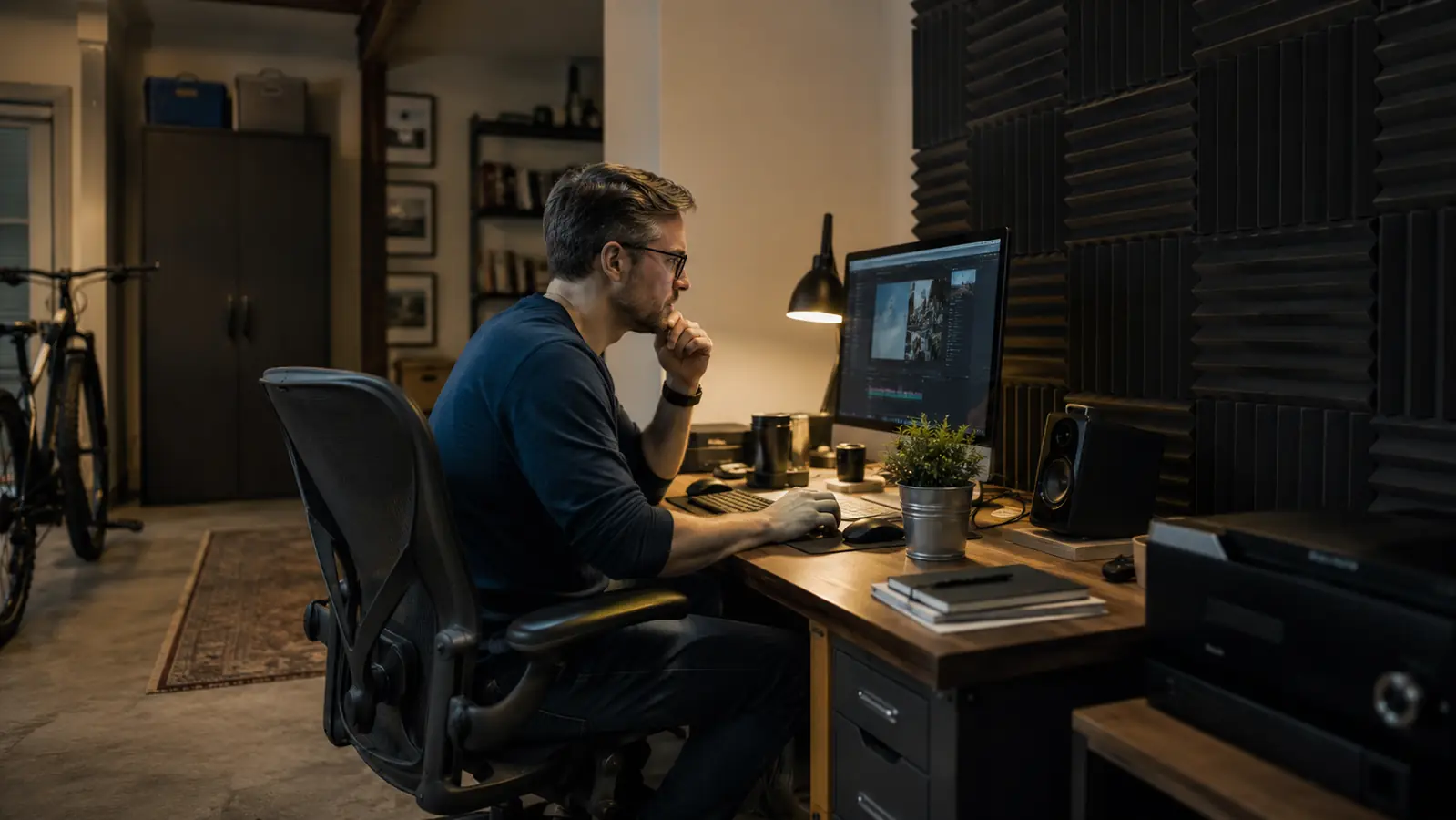
When I moved my desk out to the garage in the fall of last year, I thought I'd solved my noise problem. No more kids running past the door during a call, no more dog barking at the mail truck two rooms away. What I didn't think about was the garage itself. Concrete floor, drywall on three sides, a metal roll-up door on the fourth, and absolutely nothing soft in the room to stop sound from bouncing around. I found out how bad it was on my first team call from the new setup. What finally fixed it was a box of JBER acoustic foam panels, twelve of them, and the difference on the very next call was impossible to miss.
About ten minutes in, my project manager asked if I was calling in from a parking garage. I laughed, said no, just my office, and moved on. But I went back and listened to the call recording that night and understood exactly what he meant. My voice had this hollow, tinny quality, like it was hitting hard walls and coming back at the mic half a beat late. It wasn't subtle once I actually paid attention to it.
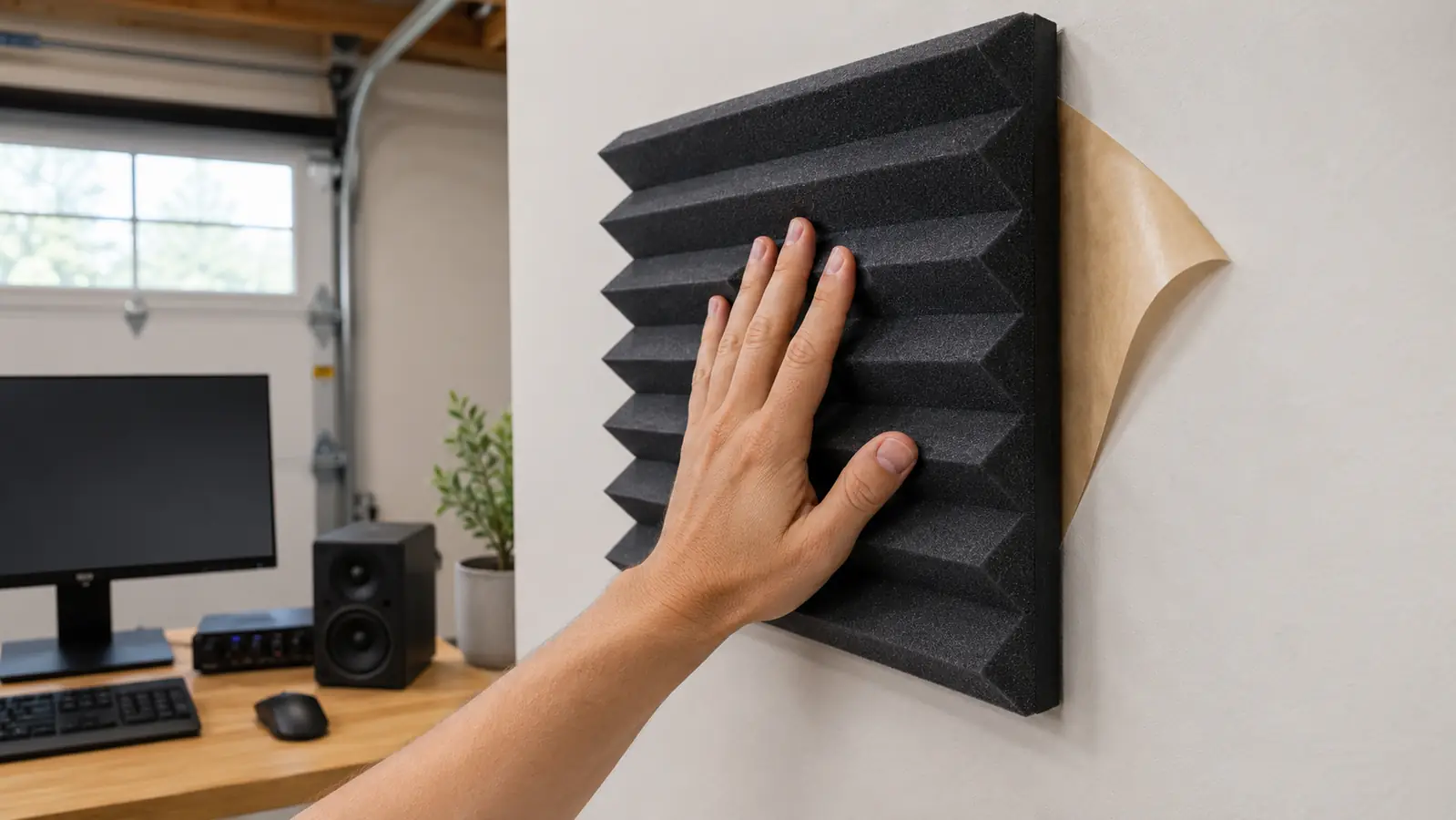
I spent the next week half-ignoring it and half-obsessing over it, the way you do with a problem that's annoying but not urgent enough to fix immediately. I tried talking closer to the mic. I tried turning down the input gain. Neither one touched the actual issue, because the issue wasn't my microphone. It was the room reflecting every word I said back into that microphone a fraction of a second later. The JBER panels I ended up ordering were the first thing I tried that actually touched the problem instead of masking it.
My wife, who works in an office building downtown and has zero patience for me complaining about a problem I could just fix, was the one who said it plainly. She'd read something about acoustic foam panels for podcasters and figured it was the same idea. Cover the hard surfaces near the mic, kill the reflection, done. I was skeptical that a stack of foam squares off Amazon could do what an actual audio engineer would need special equipment for, but at fourteen dollars I wasn't risking much by finding out.
The pack that showed up was a set of JBER acoustic foam wedges, twelve one-inch squares with adhesive backing already applied. I want to be honest that I expected them to feel like the foam padding you'd find in a cheap shipping box. They didn't. They had real weight to them and held their pyramid shape when I pressed on them, which made me a little more optimistic before I'd even stuck the first one to the wall.
I didn't need a quiet room. I needed a room that stopped talking back to me.
If Your Room Sounds Like a Parking Garage, Start Here
This is the exact 12-pack I stuck up in an afternoon. It won't make a hard-surfaced room silent, but it kills the reflection that makes video calls sound rough and unprofessional.
Amazon Check Today's Price on Amazon →I mounted six panels on the wall directly behind my monitor, since that's the surface facing my mic the most head-on, and four more on the side wall next to my desk where the drywall met bare concrete in the corner. The last two went above my head near the ceiling line, a spot I almost skipped until I remembered reading that high corners bounce sound just as much as flat walls do. The whole job took maybe thirty five minutes, most of it spent deciding where things should go rather than actually sticking them up.
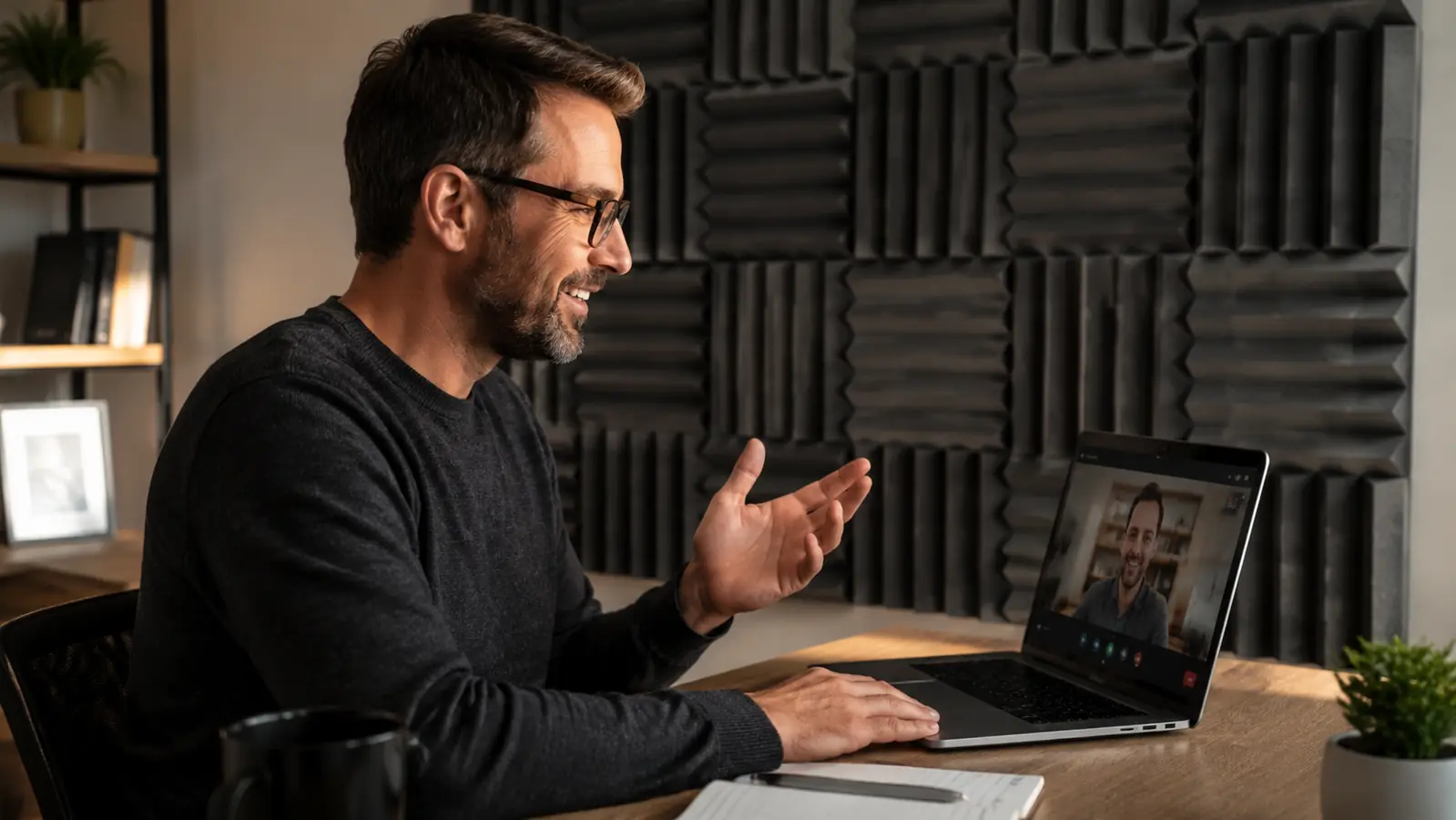
The difference on my very next call was immediate enough that I didn't need a recording to confirm it. My project manager, the same guy who'd made the parking garage joke two weeks earlier, asked if I'd moved offices. I told him I'd just put some foam on the wall, and he said whatever it was, keep doing it. That was the whole review I needed.

It's not a magic fix, and I want to be straight about that. The concrete floor still carries a little bit of a cold, flat sound underneath everything, and if I clap loudly in the middle of the room I can still hear a faint tail on it. But the harsh, bouncy quality that made every call sound like I was shouting into a stairwell is gone. My voice sounds like it's coming from a person sitting in a room, not from a person sitting inside a drum.
Four months in, the panels are still exactly where I put them. One adhesive square near the ceiling started peeling at a corner around month three, which I fixed with a dab of removable putty in about ten seconds. Everything else has held without any fuss, and the foam still looks the same as the day I put it up, no sagging, no discoloring from the window light that hits that wall most afternoons.
What I'd Tell You If We Were Sitting at My Kitchen Table
If you've turned a spare room, a basement, or a garage into your office and you've noticed your calls sound a little off, a little distant, a little too roomy, I wouldn't tell you to gut the space or hire someone. I'd tell you to spend fourteen dollars before you spend anything else on the problem. Stick a few panels on the wall behind your monitor and the nearest corner, give it a week of real calls, and see if people stop asking where you're calling from. That's the only test that matters, and it's the one that convinced me.
Stop Sounding Like You're Calling From a Stairwell
Same 12-pack, same afternoon install. If your home office has hard walls and a hard floor, this is the cheapest fix worth trying before anything else.
Amazon Check Today's Price on Amazon →