
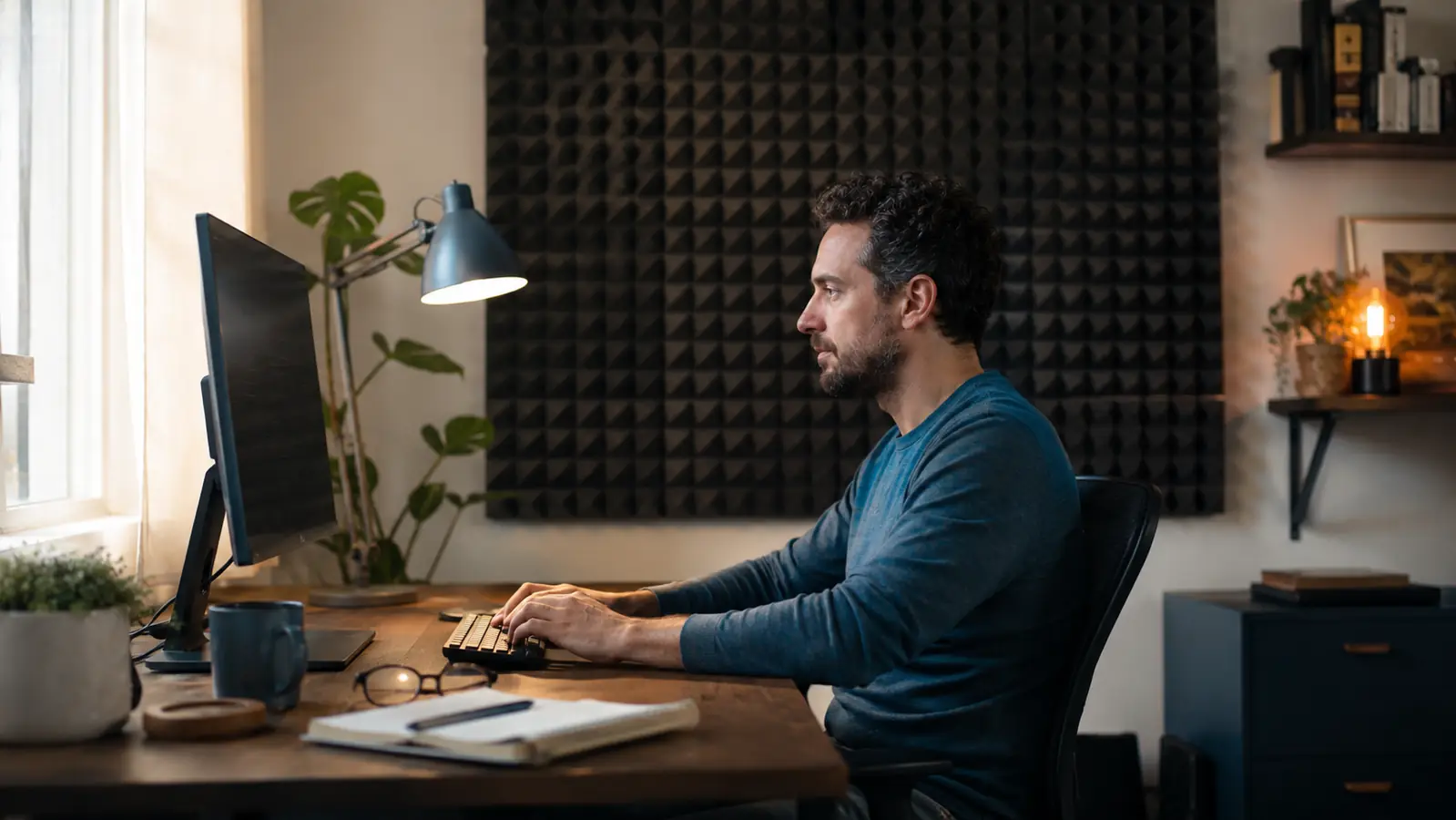
Three months into working from the spare bedroom I'd converted into an office, a client stopped mid-sentence on a Zoom call and asked why I sounded like I was talking from inside a bathroom. I laughed it off, but he wasn't wrong. Bare drywall, a hardwood floor, and a west-facing window with no curtains had turned my office into a small echo chamber. Every word bounced back at me half a second late. When I played back a recorded call afterward, I could actually hear my own voice trailing behind itself. That was the moment I stopped ignoring the problem and started looking into acoustic foam panels, which is how I ended up with a 12-pack of JBER 1-inch wedges on my wall for the past six months.
I should say up front that I'm not an audio engineer. I'm a freelance copywriter who spends four to six hours a day on client calls, and my only real qualification here is that I got tired of apologizing for my own room before every meeting. The room itself is a 10 by 11 foot spare bedroom with drywall on three sides, a closet with mirrored doors on the fourth, and a wood floor with no rug. In other words, close to the worst-case setup for anyone trying to sound decent on a call. This review covers what actually changed after I installed the panels in January, what didn't change, and where I think the money is better spent elsewhere if your setup looks different from mine.
The Quick Verdict
Real, noticeable echo reduction for a budget price, but this is treatment for reflection points, not a soundproofing solution. Manage your expectations and it earns its spot on the wall.
Amazon Check Today's Price →Tired of Clients Asking If You're Calling From a Stairwell?
If your home office has hard walls, a hard floor, and zero soft surfaces, you already know the echo problem before anyone tells you. The JBER 12-pack targets the exact spots that cause it, and it costs less than a single client lunch.
Amazon Check Today's Price on Amazon →How I've Used It
The panels came with pre-cut self-adhesive squares in the box, which mattered to me because I didn't want to mess with spray adhesive on a rental wall. I mapped out my office before sticking anything down. The goal wasn't to cover every inch of drywall, it was to hit the first reflection points, the spots where sound bounces directly off a hard surface and back into the microphone before your ear even registers it as an echo. For most home offices that means the wall directly behind your monitor and the wall or corner closest to your speaking position.
I put six panels in a loose grid on the wall behind my monitor, since that's what my webcam faces and what my microphone picks up most directly. Four went on the side wall to my left, where my desk sits close to the corner. The last two went up in the ceiling corner behind me, which turned out to matter more than I expected since that corner was bouncing high-frequency chatter back into every call. None of it required tools beyond a tape measure and a level.
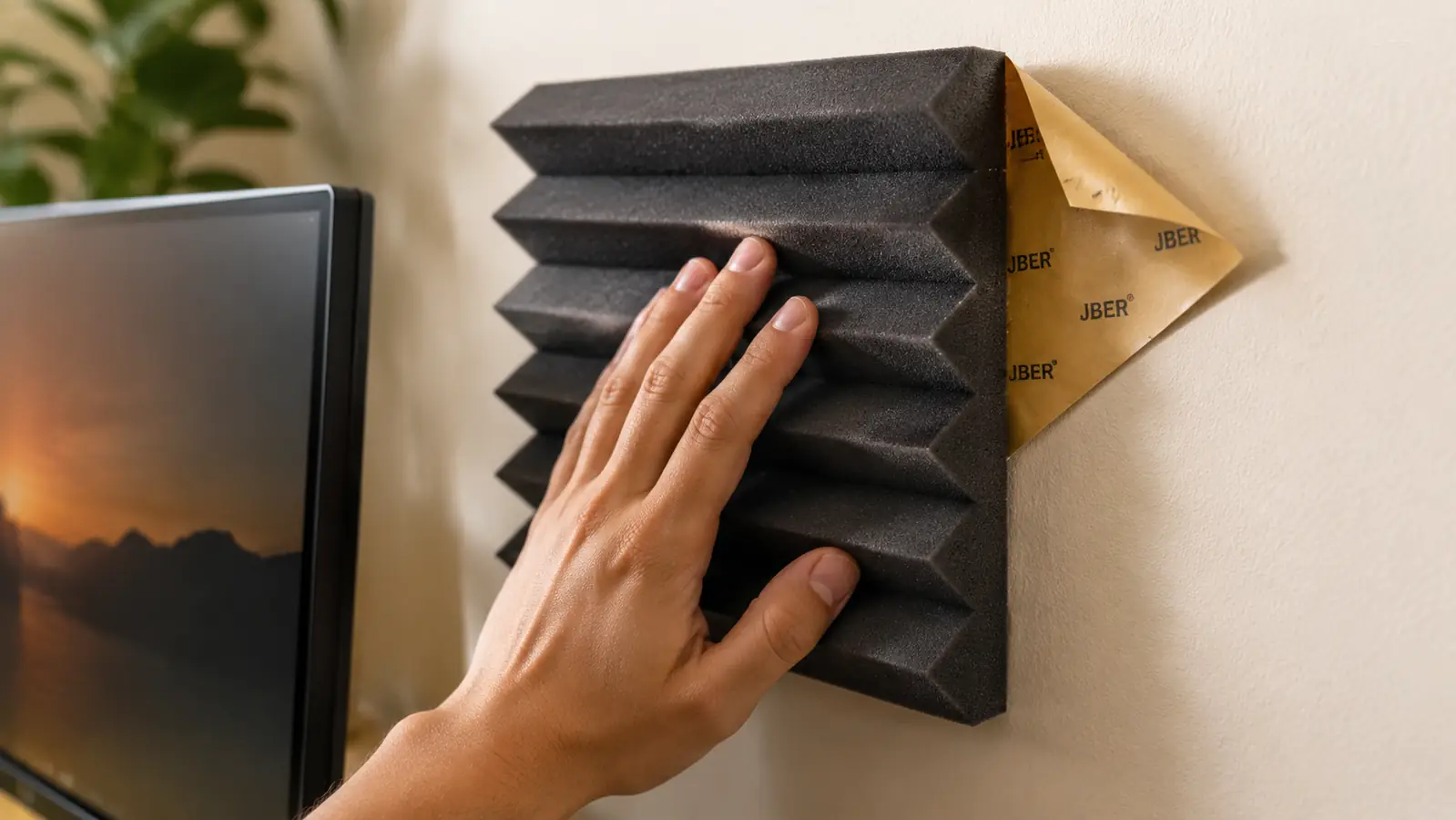
Full install took about 40 minutes, most of which was spent deciding on spacing rather than actually sticking panels to the wall. The foam itself is dense for the price, about an inch thick, cut into the pyramid wedge pattern you'll recognize from recording studios. It's lightweight enough that the adhesive squares held every panel on the first try, no sagging in the first week the way some cheaper foam does.
I didn't get the spacing right on the first attempt. My initial layout packed all twelve panels tight together in one solid block behind the monitor, which looked neat but left the side wall and ceiling corner untreated and doing nothing. After the first week of calls, I pulled four panels off that block, moved them to the side wall, and freed up two more for the ceiling corner. Spreading the coverage across the actual reflection points made a bigger difference than clustering them all in one spot ever did, which is the one change I'd tell anyone to make before they even open the box.
What's Actually in the 12-Pack
Each panel measures 12 by 12 inches and about an inch thick, which sounds small until you realize a 12-pack covers roughly 12 square feet once you lay them out with reasonable spacing. That's enough for one wall treated properly, not enough for a full room if you're trying to go wall to wall. I went with the charcoal gray color option because it blended into my dark accent wall better than the standard black or beige would have against my lighter trim. The box also included a printed layout guide with a few suggested patterns, which I ignored in favor of my own reflection-point mapping, but it's a nice touch for anyone who wants a simpler starting point.
JBER lists these as fire-resistant, which I haven't tested and hope never to, but the material does feel denser than the flimsy craft-store foam I almost bought instead. It doesn't crumble when you press a fingernail into it, and the wedge pattern holds its shape rather than flattening out under its own weight after a few weeks on the wall.
One thing worth knowing before you order: this is acoustic absorption foam, not soundproofing insulation. It reduces the reflected sound bouncing around inside your room, which is exactly the echo problem I had. It does very little to block sound coming through the wall from a neighbor's TV or a dog barking two rooms over. If your problem is noise coming in from outside your office rather than echo bouncing around inside it, this product solves a different problem than the one you have.
The Echo Test: Before and After
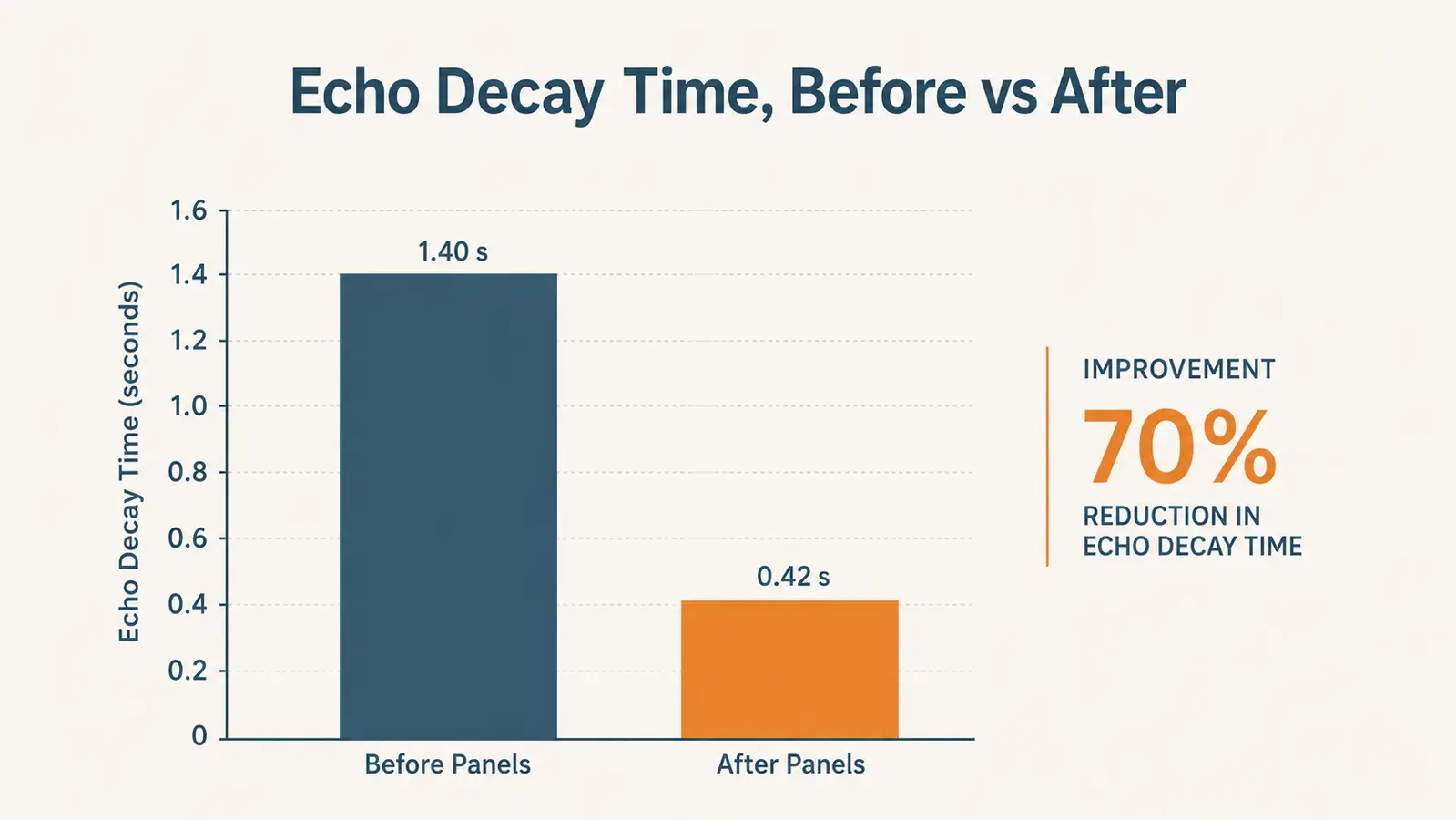
Before I installed anything, I recorded a 15-second voice memo clapping once in the middle of my office, then talking normally for a sentence or two. Played back, you could hear a clear slap-back echo on the clap, almost a quarter second of trailing sound, and my voice had that hollow, distant quality that comes from too much reflected sound hitting the mic alongside the direct signal. I did the same test again the week after installing the panels, then again at the three-month and six-month marks to see if anything had changed with time.
The difference after week one was immediate and, frankly, bigger than I expected for an inexpensive kit. The clap went from a ringing slap-back to a much shorter, duller thud. My voice on the recording sounded closer to the mic and less like it was coming out of a tin can. It wasn't studio quiet, there was still some low-frequency rumble the foam can't touch since foam this thin mostly handles mid and high frequencies, but the harsh, bouncy quality that made my calls sound unprofessional was noticeably reduced.
The client who first called out the echo problem messaged me unprompted about six weeks after I'd made the change to say my calls sounded better, without me mentioning I'd done anything to the room. That's the kind of feedback that matters more to me than any decibel reading I could take myself, since he wasn't primed to notice a difference and noticed one anyway.
How the Foam Held Up After Six Months
Six months in, the panels are still on the wall, still in the same configuration, and still doing the job they did in week one. The bigger question for a foam product is always whether it stays put and whether it degrades. On both counts, my experience has been mostly good with a couple of caveats worth flagging.
Two of the twelve adhesive squares gave out around month four, both on the ceiling corner panels, which makes sense since gravity is working against overhead placement in a way it isn't on a vertical wall. I re-stuck them with a small dab of removable mounting putty and they've held since. The wall-mounted panels haven't budged. I'd budget for that possibility if you're putting any panels on a ceiling or an angled surface rather than a flat vertical wall.
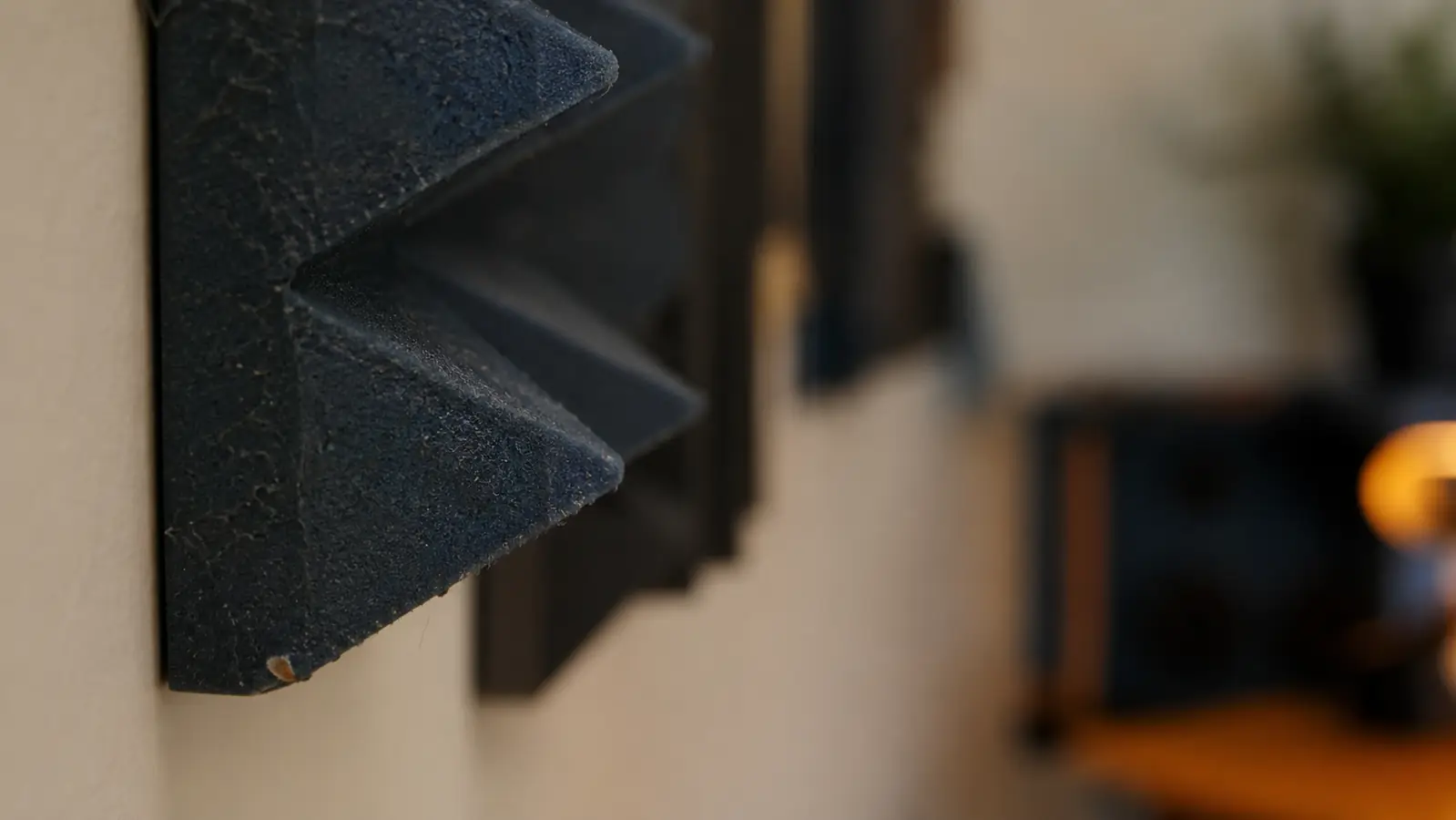
The foam itself has picked up a light layer of dust, which is normal for any open-cell foam sitting in a room, and it's visible enough on the charcoal color that I've run a vacuum brush attachment over the panels twice in six months. One panel corner near my desk has started to fray slightly where my chair occasionally bumps it when I roll back too fast, cosmetic wear rather than a structural problem, but it's there if you look closely. Color hasn't faded from the western window light hitting that wall part of the day, which I was mildly worried about going in.
What I Considered Instead
Before landing on foam wedges, I looked at a few other routes. Fabric-wrapped acoustic panels look more like art on the wall and handle low frequencies a bit better, but they start at a premium price point per panel, which for the same 12 square feet of coverage would have run me several times more. Moving blankets hung on the wall are a well-known budget option in podcasting circles, and they do work, but they look exactly like what they are, and I wasn't willing to have a moving blanket visible behind me on every client call.
I also considered a white noise machine as an alternative fix, since a few remote work forums suggested masking the echo instead of absorbing it. That solves a different problem though. Masking noise helps if you're trying to block distracting sound from reaching you, but it doesn't do anything about the echo your own microphone is picking up and sending to whoever you're talking to. For my specific problem, which was people on the other end of the call hearing my room, the foam panels were the more direct fix.
What I Liked
- Noticeable echo reduction within the first week, confirmed by an unprompted client comment
- Pre-cut adhesive squares included, no separate adhesive purchase needed
- Dense enough foam that it holds its wedge shape after six months
- Affordable enough to treat a full wall on a budget
- Charcoal and other color options blend in better than stark black or bright white foam
Where It Falls Short
- Only covers about 12 square feet, not enough for a full room without buying multiple packs
- Two of twelve adhesive squares failed on an overhead ceiling placement by month four
- Does nothing for outside noise coming through walls, only interior reflected echo
- Minor edge fraying appeared on one panel near frequent chair contact
- Foam collects visible dust over time and needs occasional light cleaning
The panels didn't make my office silent. They made it sound like I was actually in a room, not a bathroom, and that turned out to be the whole point.
Who This Is For
If you spend real hours every week on video or voice calls out of a room with hard walls and a hard floor, bedroom, basement, converted garage, this is a cheap and low-risk fix worth trying first. It's also a solid pick if you record voiceover, podcast audio, or anything where the room sound is part of the final product and you don't have the budget or the landlord's permission for real soundproofing. If you're renting and can't drill into walls or hire someone to treat the room properly, the adhesive-square installation is about as low-commitment as acoustic treatment gets.
Who Should Skip It
If your actual complaint is noise coming from outside your office, traffic, a roommate's TV, a neighbor's dog, this product won't fix that, and you'd be better served by a white noise machine or actual sound-blocking material in the wall itself. It's also not the right buy if you need to treat a large room, since one 12-pack covers a single wall's worth of reflection points at best, and you'd need two or three packs plus a more deliberate layout for anything bigger. And if your room already has carpet, curtains, and a couch soaking up sound, you may not have much of an echo problem to solve in the first place.
Your Next Call Could Sound Completely Different
Six months later, this is still the cheapest fix I've made to my home office setup, and the one clients actually comment on unprompted. If your room has the same hard-surface echo problem mine did, it's a low-risk way to find out fast.
Amazon Check Today's Price on Amazon →